

Does Therapy Help With Depression
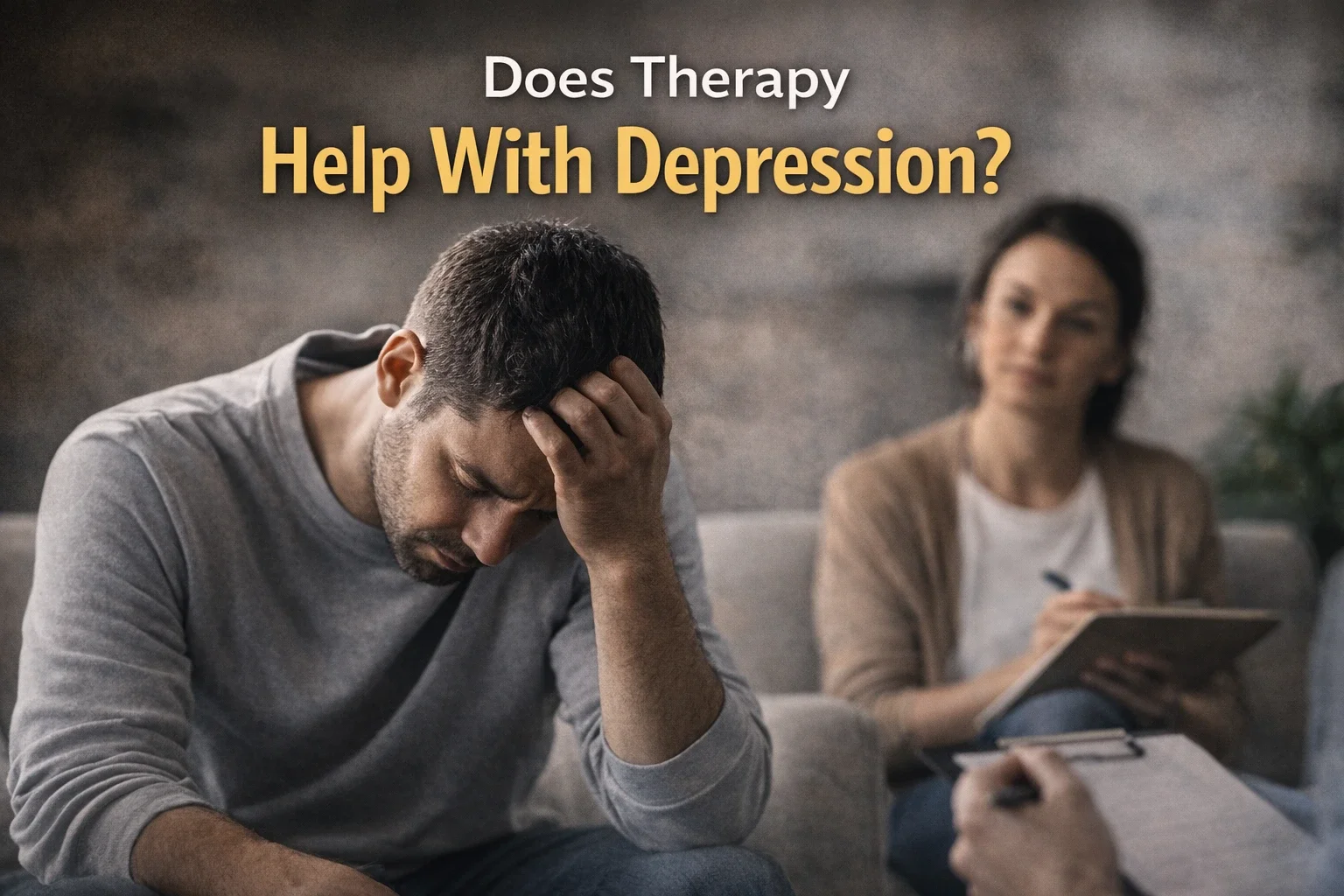
Sometimes people ask about therapy like they’re afraid the question itself means they’ve already failed somehow. Or that if therapy doesn’t work, it proves something is wrong with them. That hesitation makes sense. Depression has a way of shrinking confidence, even around asking for help. If you’re here because you’re struggling, or because you’re watching someone you love struggle, it is important to know that wondering whether therapy helps is a very human question. It’s not a weakness. It’s a sign you’re thinking carefully about something that matters.
What Depression Actually Feels Like Day To Day
Depression isn’t always dramatic sadness. A lot of the time, it’s quieter than that. It’s waking up tired no matter how long you slept. It’s losing interest in things you used to enjoy and feeling guilty about that loss. It’s feeling heavy for no clear reason, or numb when you think you should feel something. People talk about depression symptoms as if they’re obvious, but many are subtle and easy to dismiss like trouble concentrating, irritability, especially for men, or a sense that everything takes more effort than it should. You might even look “fine” to others while feeling completely disconnected inside. There are also different types of depression, and they don’t all show up the same way. Some come in waves, some linger for years, some are tied to life changes, and some seem to appear without a clear explanation. That variety is one reason advice that works for one person can fall flat for another.
Why Therapy Gets Suggested So Often
When people talk about the benefits of therapy for depression, it’s usually not because therapy magically fixes everything. It’s because depression tends to distort how we think about ourselves, our past, and our future. Those distortions feel real when you’re inside them. Therapy gives you a space where those thoughts can be spoken out loud without being judged or minimized. Sometimes that alone changes things. Hearing your own words reflected back can help you notice patterns you couldn’t see before.
If you’ve ever wondered how does therapy help with depression, the honest answer is that it often helps by making the invisible visible. It helps you understand why certain moments hit harder, why certain habits stick, and why rest doesn’t always feel restorative. At Chanderbhan Psychological Services, we often see how having a consistent, compassionate space to talk can gently loosen depression’s grip. Working with our therapists in Laredo, TX allows clients to explore these thoughts safely, at their own pace, without pressure or judgment.
Does Therapy Really Help With Depression?
This is the question people ask: Does therapy really help with depression? Sometimes yes, sometimes partially, sometimes it helps in ways that aren’t obvious until later. Therapy isn’t a straight line upward. You might feel worse before you feel better, especially when you start talking about things you’ve been avoiding. You might leave some sessions feeling lighter and others feeling raw. That doesn’t mean it isn’t working. What therapy often does is reduce the sense of being alone with your thoughts. It can help you learn how to sit with difficult emotions instead of fighting them constantly. For some people, that shift is life-changing. For others, it’s one piece of a larger puzzle. It’s also possible, particularly in the case of long-standing depression that impacts functioning in major life areas, your therapist may talk with you about the possibility of seeking a consultation with a medication provider. At Chanderbhan Psychological Services, our therapists are trained to recognize when a referral for a psychiatric or medication evaluation may be appropriate, and we approach these conversations thoughtfully and collaboratively, with your overall wellbeing in mind.
What Therapy Can And Can’t Do
Therapy can help you understand the causes of depression, whether they’re rooted in past experiences, ongoing stress, biology, or a combination of things. It can help you develop coping tools that actually fit your life, not just sound good on paper. What it can’t do is erase pain overnight. It won’t turn sadness into constant positivity, and it won’t prevent hard days from happening. Therapy works best when it’s seen as support, not a cure-all. That’s also why treatment for depression often looks different from person to person. Some people combine therapy with medication. Others focus on therapy alone, lifestyle changes, or community support. None of these paths are failures. They’re adaptations.
Finding The Right Kind Of Support
Not every therapist is the right fit, and that matters more than people admit. Feeling safe, heard, and respected is not optional when you’re opening up about depression. If something feels off, it’s okay to trust that feeling. Therapy doesn’t have to be forever. For some people, it’s a few months during a particularly heavy period. For others, it’s longer-term. People use therapy in different ways to benefit their well-being. The value isn’t in the length, but in whether it helps you relate to yourself with a little more clarity and compassion.
If you’re supporting someone else, sometimes the most helpful thing you can do is listen without trying to fix them. Depression often improves when people feel understood, not rushed. We believe therapy works best when you feel truly seen and respected. At Chanderbhan Psychological Services, our South Texas therapists focus on building trust first, whether through online counseling or in-person sessions in Laredo, TX.
Compassionate, Professional Mental Health Care in South Texas
At Chanderbhan Psychological Services, we are a trusted group practice offering therapy, counseling, and psychological evaluations grounded in clinical expertise and ethical care. We serve individuals, teens, couples, and families across South Texas through online counseling and in-person sessions in Laredo, TX. Our therapists provide thoughtful, individualized support in a safe and confidential space, helping clients feel understood, supported, and empowered as they work toward emotional well-being and lasting personal growth.
The Slow, Uneven Nature Of Healing
Healing from depression is rarely dramatic. It shows up in small moments. A morning where getting out of bed feels slightly easier. A thought you notice before it spirals. A day where laughter surprises you. Therapy doesn’t promise happiness. What it often offers is steadiness. A way to keep going even when things feel uncertain. That steadiness can be enough to change a life over time. If you’re unsure whether therapy is worth trying, that uncertainty doesn’t disqualify you. It makes you human. You don’t need to be convinced. You just need to be curious enough to take one small step.
-
Depression can come from many places, including life stress, loss, trauma, genetics, or long-term pressure. Often it’s a mix, not one clear cause.
-
It can feel like sadness, numbness, exhaustion, or disconnection. Some people feel empty rather than upset, and many struggle quietly while appearing fine.
-
Dealing with depression often means seeking support, creating small routines, and being patient with yourself. It’s less about fixing and more about learning how to cope.
-
Signs can include low mood, loss of interest, fatigue, changes in sleep or appetite, and feeling hopeless or overwhelmed more often than usual. For men, depression often looks different; it’s more likely to show up as irritability, anger, emotional withdrawal, or increased disconnection from family and friends.
-
Overcoming depression usually happens gradually. Support, therapy, sometimes medication, and self-compassion work together rather than a single solution.
-
There isn’t a simple cure. Many people learn to manage depression and reduce its impact with the right combination of care and understanding.
-
Getting over depression isn’t about willpower. It’s about support, time, and learning new ways to respond to difficult thoughts and emotions.
-
Some people notice small changes within weeks, while others need months. Progress is often uneven and personal, not something that follows a strict timeline.
-
For some people, yes. Others benefit from combining therapy with medication. What works best depends on the person and the severity of symptoms.
-
If depression is interfering with daily life, relationships, or hope for the future, seeing a therapist sooner rather than later can be a helpful step.